Will This Sink Work? Bathroom Remodeling Tips For South Hills Homeowners
Bathroom remodeling involve many decisions, from flooring and lighting to tile, paint colors, storage, and layout. One choice that can have a bigger impact than homeowners expect is the bathroom sink. Your sink affects how the room functions every day, how much storage you have, how easy the space is to clean, and how well the finished bathroom fits the style of your home.
There are many bathroom sink styles to consider, including pedestal, wall-mounted, single-vanity, double-vanity, vessel, undermount, integrated, console, corner, trough, and farmhouse sinks. Each one offers a different balance of function, space savings, storage, and design impact.
At Obringer’s Painting & Remodeling, we help South Hills homeowners design and remodel bathrooms that actually work for their daily lives, not just bathrooms that look good in photos. When choosing a bathroom sink type, the best option depends on your space, your routine, and how your household uses the bathroom.
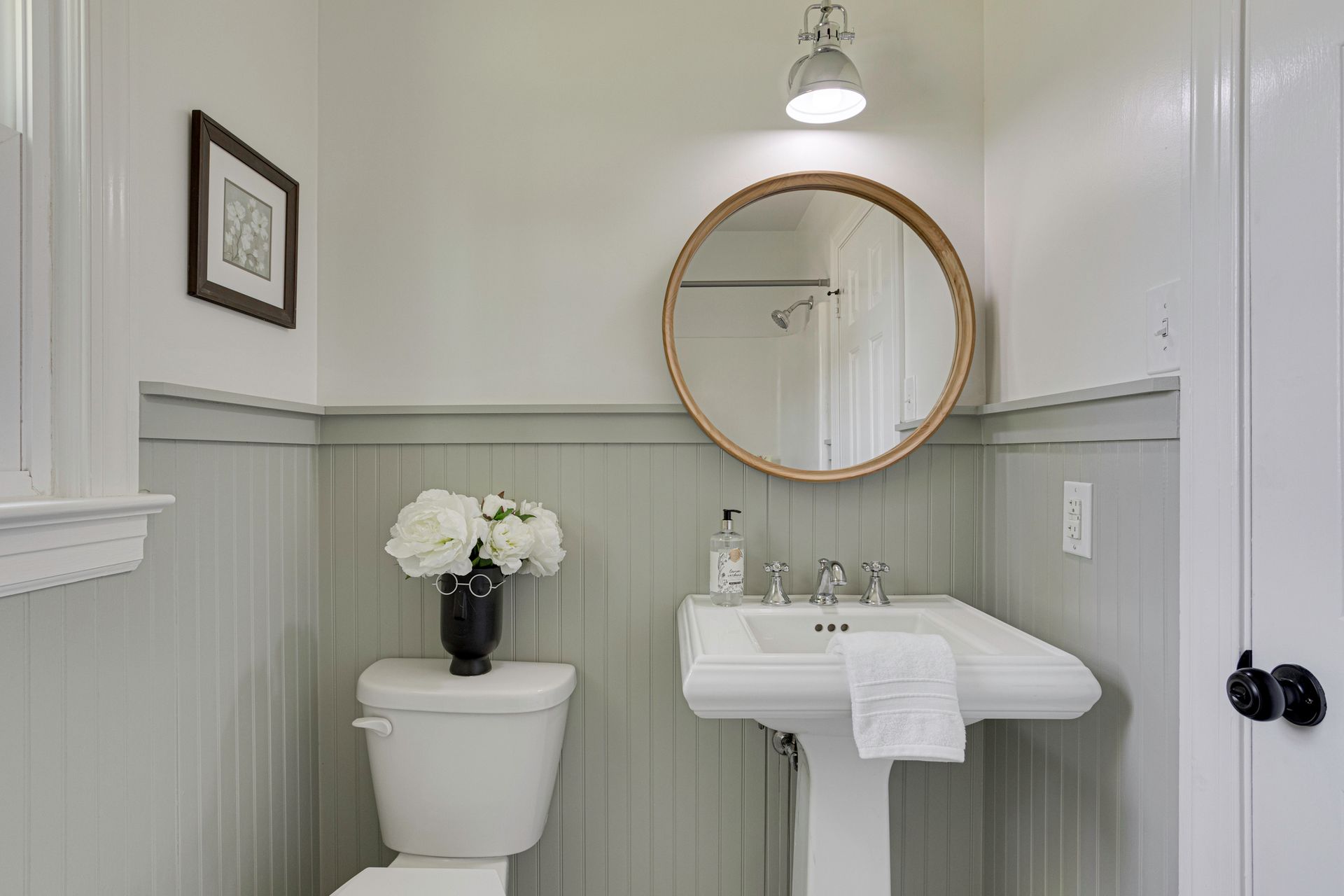
Pedestal Sinks For The Bathroom
Is a pedestal sink practical for everyday use?
A pedestal sink is a classic choice that works especially well in powder rooms, guest baths, and smaller bathrooms where floor space matters more than storage. It has a basin supported by a narrow pedestal base, which gives it a lighter look than a full vanity.
For everyday use, though, homeowners should think carefully about what they need to store nearby. A pedestal sink can look clean and traditional, but it lacks drawers, cabinets, and much counter space.
Functional limitations
- No built-in storage for toiletries, towels, or cleaning supplies
- Very little counter space
- Exposed plumbing may need careful finishing
- Not ideal for busy shared bathrooms
Added functionality
- Opens up floor space
- Makes small bathrooms feel less crowded
- Works well when storage is available elsewhere
Best use cases
- Powder rooms
- Guest bathrooms
- Older homes with traditional design details
- Small bathrooms where a full vanity feels too bulky
Faucet considerations
- Usually works with centerset or single-hole faucets
- The faucet size should match the smaller basin
- Widespread faucets may not fit every pedestal sink
Works well with these home styles
- Colonials
- Older brick homes
- Traditional South Hills homes
- Vintage-inspired remodels
Looks out of place in these styles
- Ultra-modern bathrooms
- Bathrooms where storage is the main priority
- Large primary bathrooms that need a more substantial fixture
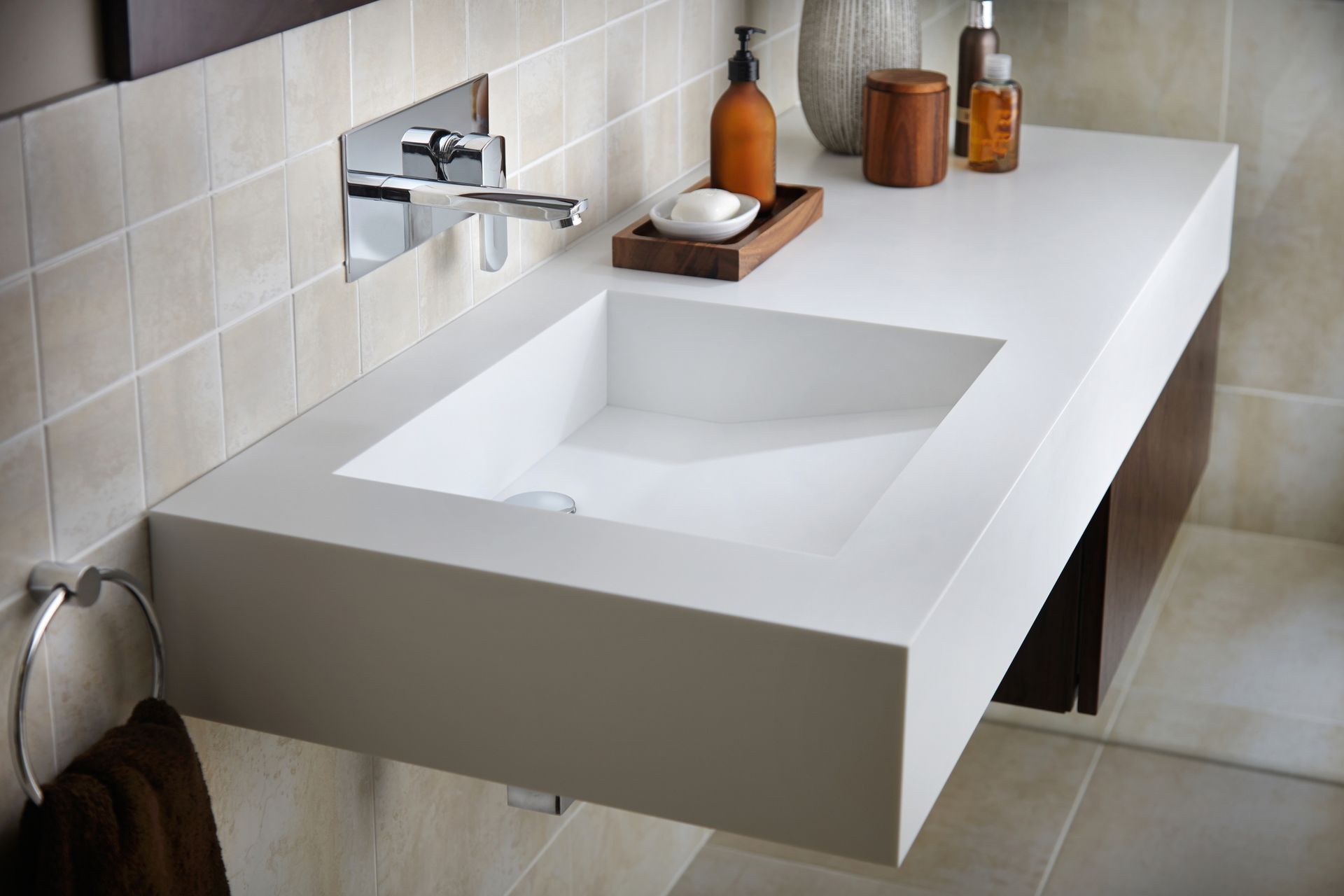
Wall-Mounted Bathroom Sinks
When does a wall-mounted sink make sense?
A wall-mounted sink attaches directly to the wall without a vanity or pedestal underneath. This creates an open look and can be useful in bathrooms where every inch matters. For homeowners looking for the best bathroom sink for a small bathroom, this style is often worth considering.
The main benefit is space. Because the floor underneath remains open, the bathroom can feel larger and easier to move through. However, that open design also means there is no hidden storage, and the plumbing may be more visible.
Functional limitations
- No built-in storage
- The wall may need reinforcement
- Plumbing must be placed and finished carefully
- Not always the best choice for households with many daily-use items
Added functionality
- Saves floor space
- Can improve accessibility
- Easier to clean underneath
- Creates a simple, uncluttered look
Best use cases
- Very small bathrooms
- Half baths
- Modern bathroom remodels
- Bathrooms where accessibility is a priority
Faucet considerations
- May use deck-mounted or wall-mounted faucets
- Plumbing placement needs to be planned early
- Faucet projection must match the basin depth to reduce splashing
Works well with these home styles
- Modern homes
- Updated split-levels
- Minimalist interiors
- Small powder rooms
Looks out of place in these styles
- Formal traditional bathrooms
- Rustic spaces
- Bathrooms that need warm, furniture-style storage
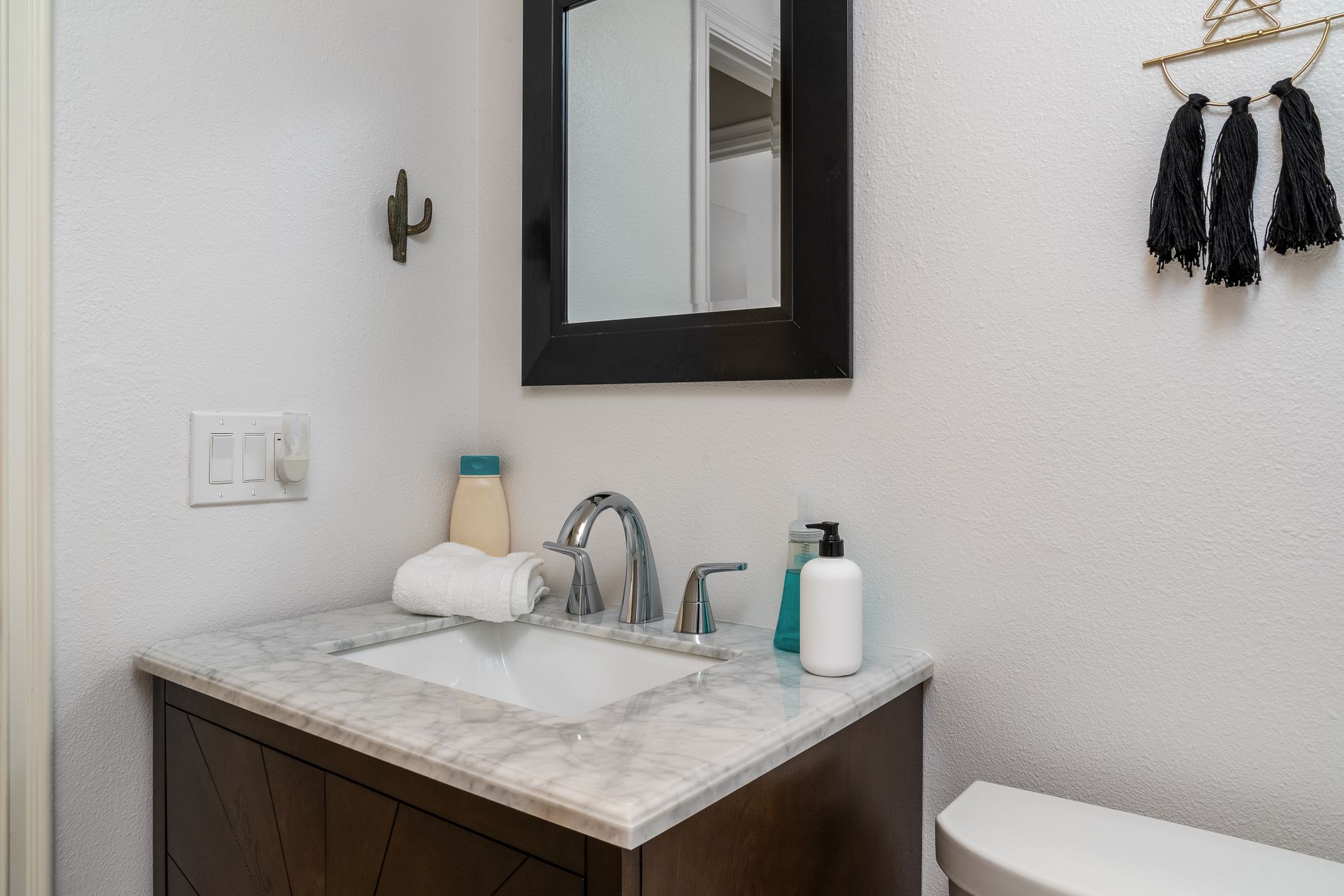
Single Vanity Sinks For Your Bathroom
Is a single vanity enough for your needs?
A single vanity sink is one of the most common bathroom sink arrangements because it offers a practical mix of storage, counter space, and style. It includes a sink set into or on top of a vanity cabinet, making it a flexible choice for bathrooms of many sizes.
For many homeowners, a single vanity is enough. It works especially well when one person uses the bathroom at a time or when the bathroom is not part of a busy morning routine. The key is choosing the right vanity width and storage layout.
Functional limitations
- Can feel limited in shared bathrooms
- Only one person can comfortably use the sink at a time
- Smaller vanities may still have limited counter space
Added functionality
- Provides useful storage
- Offers counter space for daily items
- Comes in many sizes and styles
- Works with many countertop and sink combinations
Best use cases
- Hall bathrooms
- Guest bathrooms
- Smaller primary bathrooms
- Homes where storage is important but space is limited
Faucet considerations
- Works with single-hole, center set, or widespread faucets
- Faucet choice depends on vanity size and countertop layout
- Smaller vanities benefit from compact faucet designs
Works well with these home styles
- Ranch homes
- Split-levels
- Colonials
- Transitional bathrooms
- Traditional and updated interiors
Looks out of place in these styles
- Very large primary bathrooms where a single sink feels undersized
- Bathrooms designed for two-person use
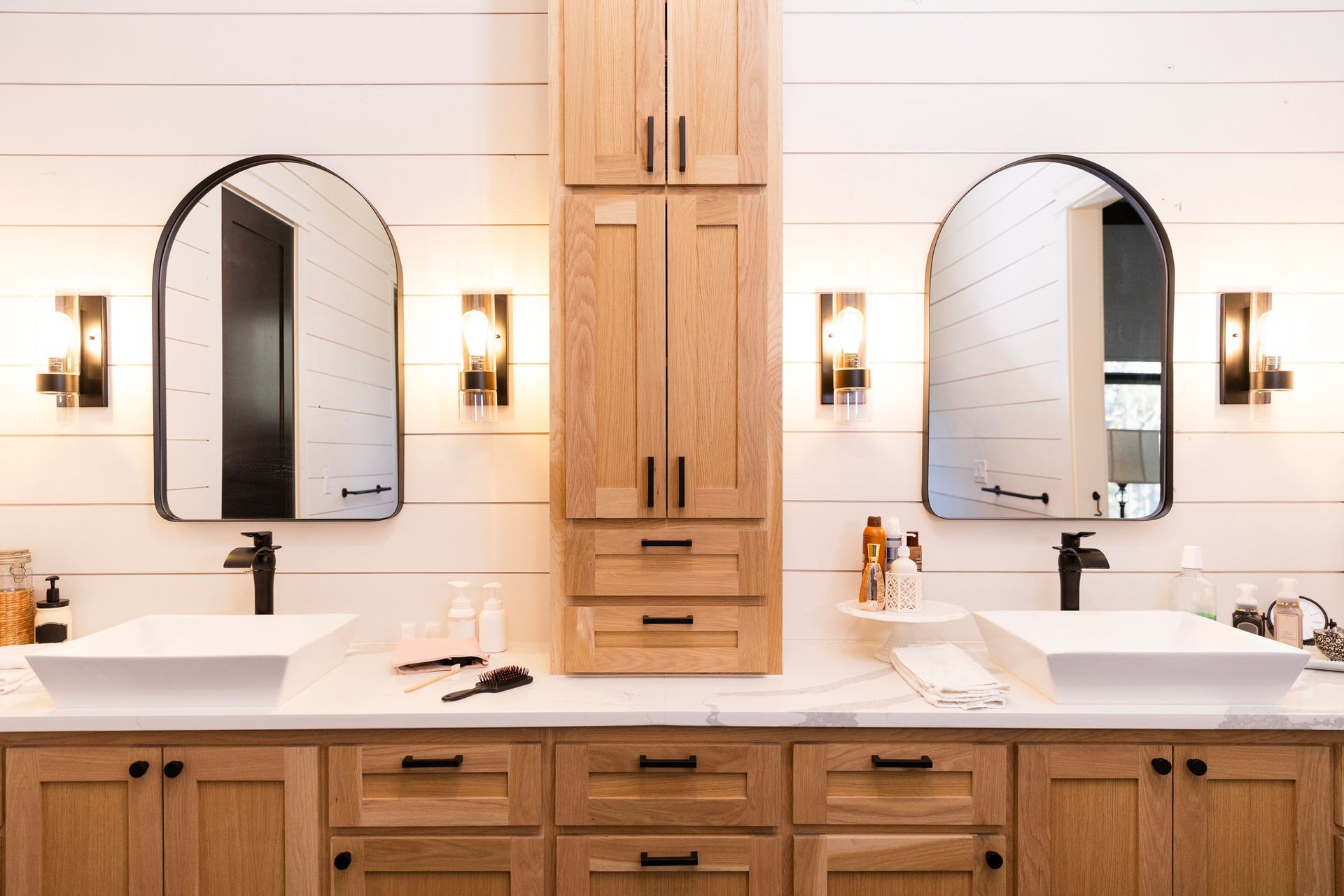
Double Vanity Bathroom Sink
Does a double vanity improve daily routines?
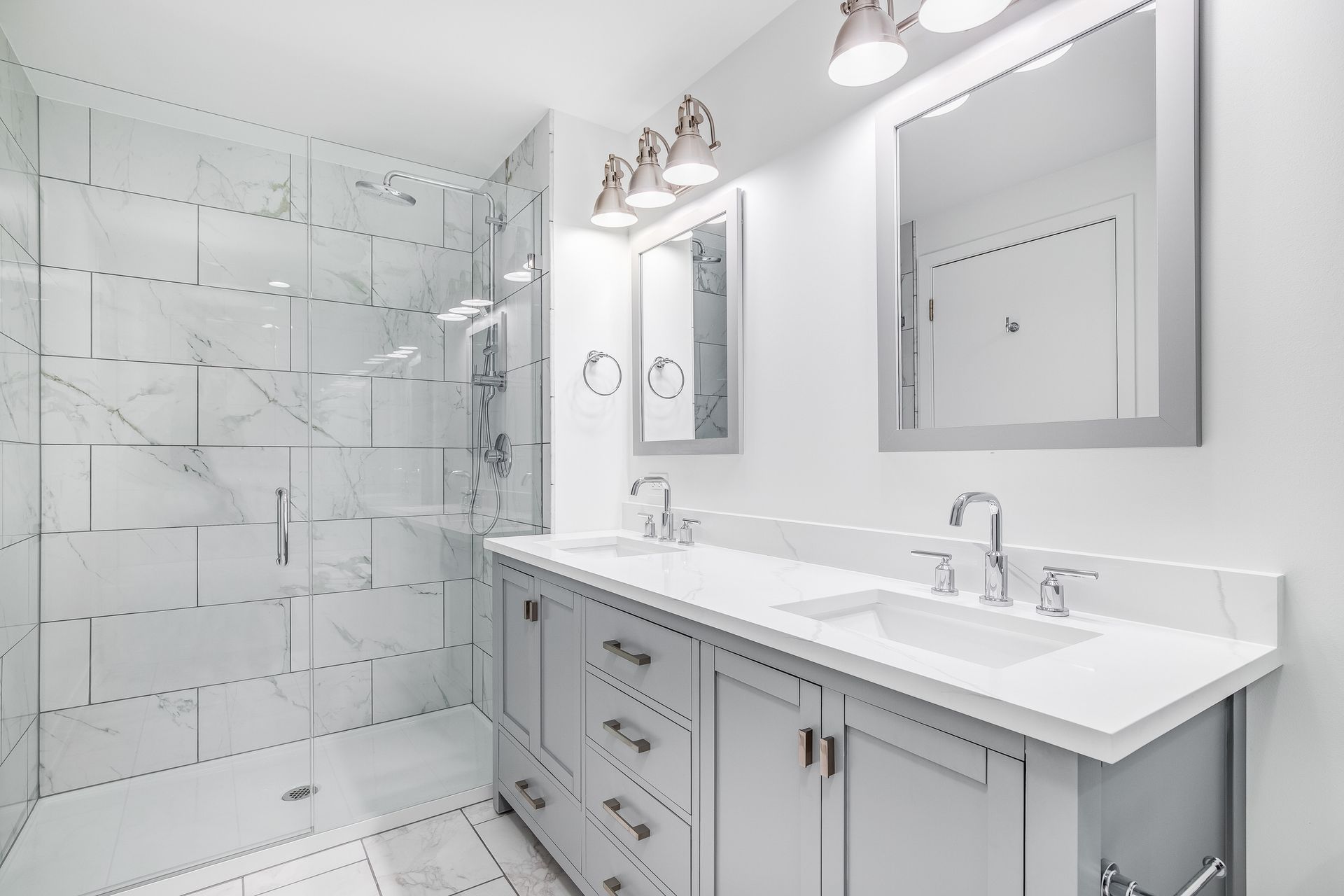
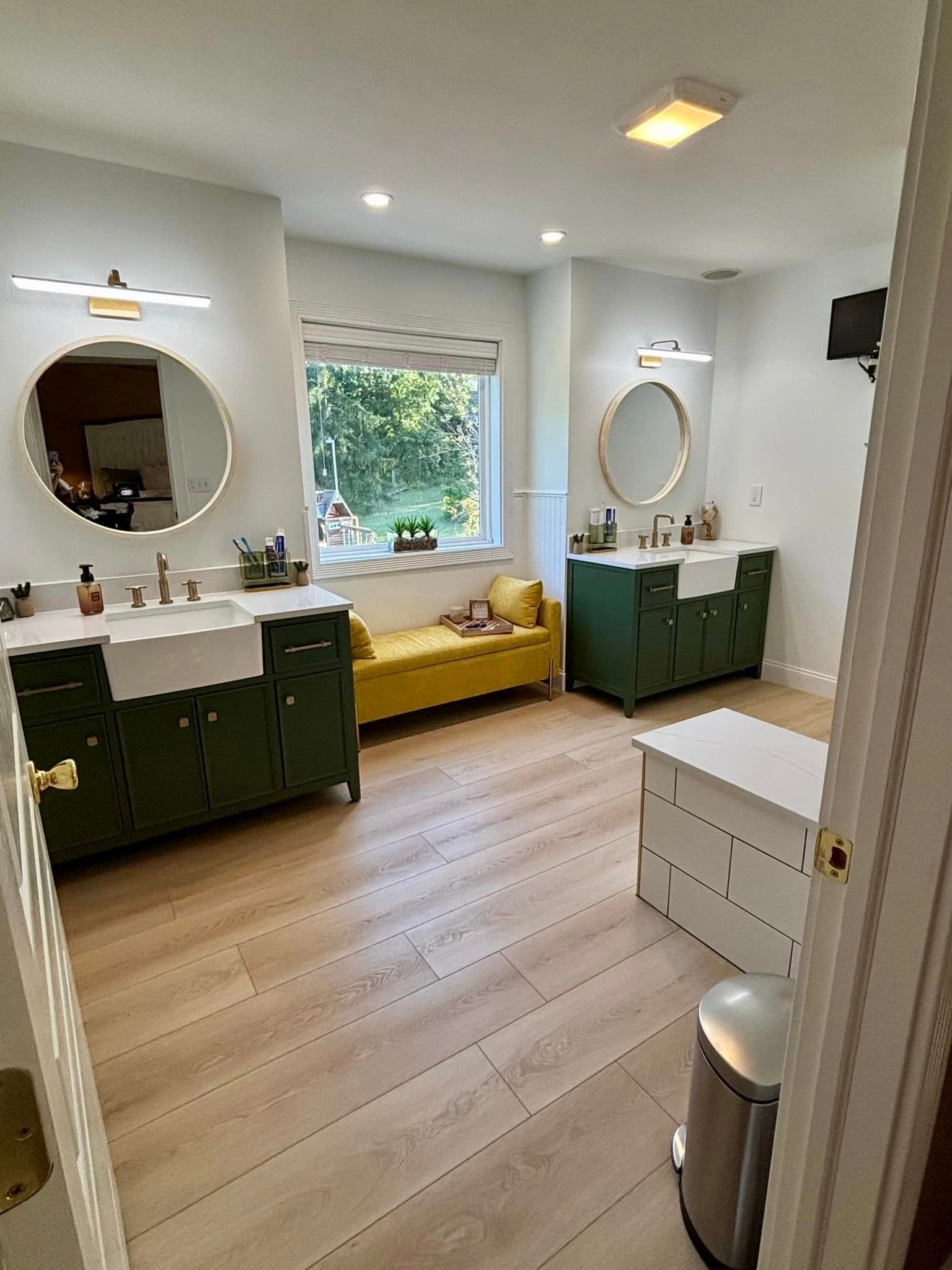
When comparing a double vanity vs. a single vanity, the biggest question is how the bathroom is used. A double vanity can make mornings easier for couples, families, and households where more than one person needs the sink at once.
That said, a double vanity is not always the better choice. It requires more wall space, more plumbing, and enough room to move comfortably. In a smaller bathroom, forcing in two sinks can reduce counter space and make the room feel cramped.
Functional limitations
- Needs more room than a single vanity
- May reduce open floor space
- Requires two sinks and faucet setups
- Can increase remodeling complexity
Added functionality
- Allows two users at once
- Adds storage
- Supports busy morning routines
- Helps separate personal items
Best use cases
- Primary bathrooms
- Shared family bathrooms
- Larger bathrooms
- Homes with couples or multiple children
Faucet considerations
- Requires two faucets
- Spacing must allow comfortable use
- Plumbing should be reviewed before layout decisions are finalized
Works well with these home styles
- Larger Colonials
- Newer South Hills homes
- Expanded primary suites
- Family-focused remodels
Looks out of place in these styles
- Narrow bathrooms
- Small older bathrooms
- Powder rooms
- Spaces where storage would be more useful than a second sink
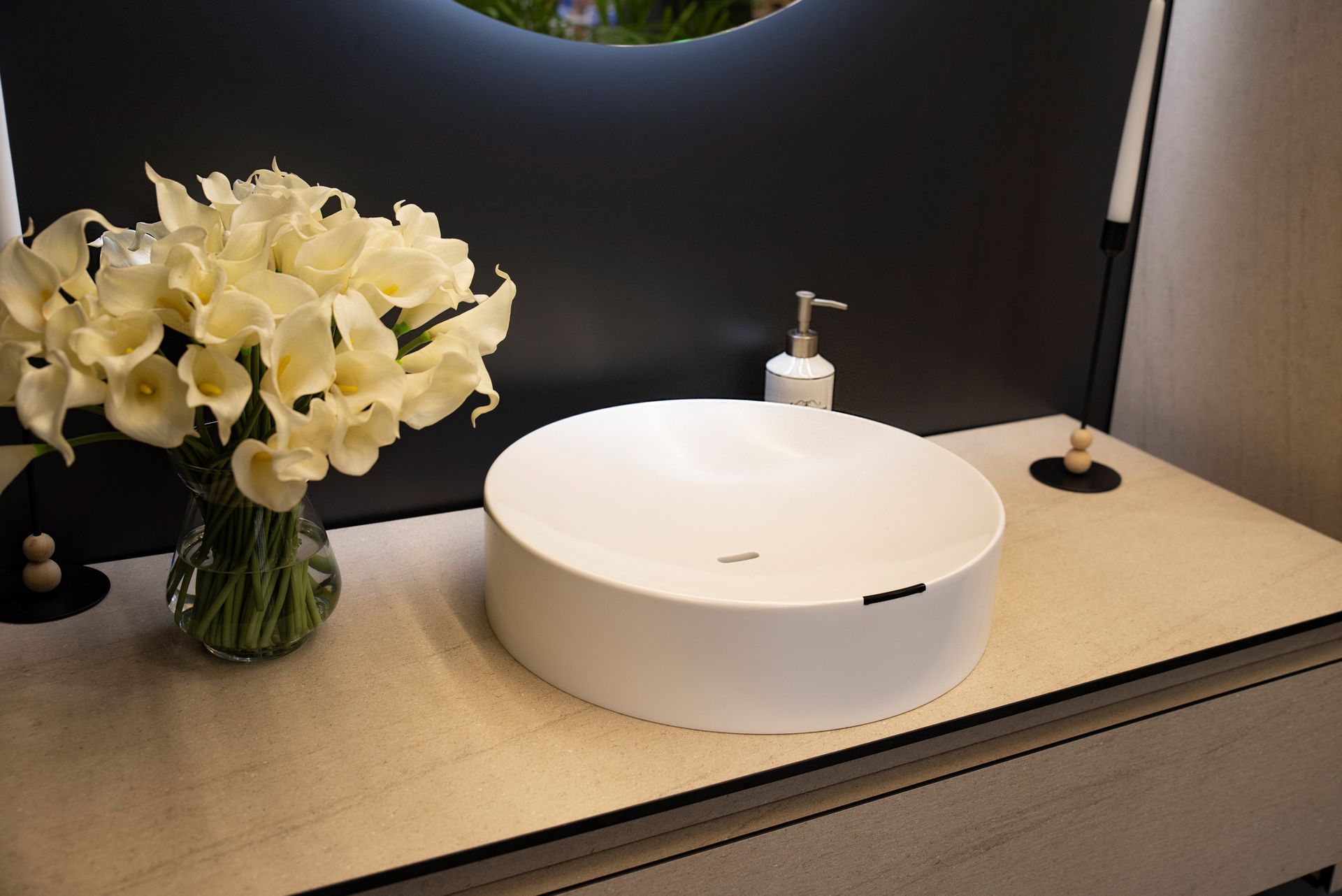
Vessel Style Bathroom Sink
Are vessel sinks stylish or difficult to maintain?
A vessel sink sits on top of the counter rather than being recessed into it. This gives the sink a more noticeable, decorative appearance. For homeowners collecting bathroom sink ideas, vessel sinks often stand out because they can add personality to a remodel.
The tradeoff is maintenance and usability. Since the bowl sits above the counter, cleaning around the base can take more effort. Faucet height and placement also matter, as an improper pairing can cause splashing.
Functional limitations
- It can be harder to clean around the base
- It may sit too high if the vanity is not planned correctly
- Splashing can happen with the wrong faucet
- Not always ideal for children
Added functionality
- Creates a strong design feature
- Allows more countertop visibility
- Works with a range of materials and shapes
Best use cases
- Powder rooms
- Guest bathrooms
- Design-focused remodels
- Bathrooms are used less heavily day to day
Faucet considerations
- Usually needs a taller faucet or a wall-mounted faucet
- Faucet height and reach must be carefully matched
- Water should flow toward the drain, not the side of the bowl
Works well with these home styles
- Contemporary homes
- Transitional bathrooms
- Updated powder rooms
- Spaces with custom countertop materials
Looks out of place in these styles
- Strictly traditional bathrooms
- Bathrooms are used heavily by children
- Small vanities where the sink overwhelms the counter
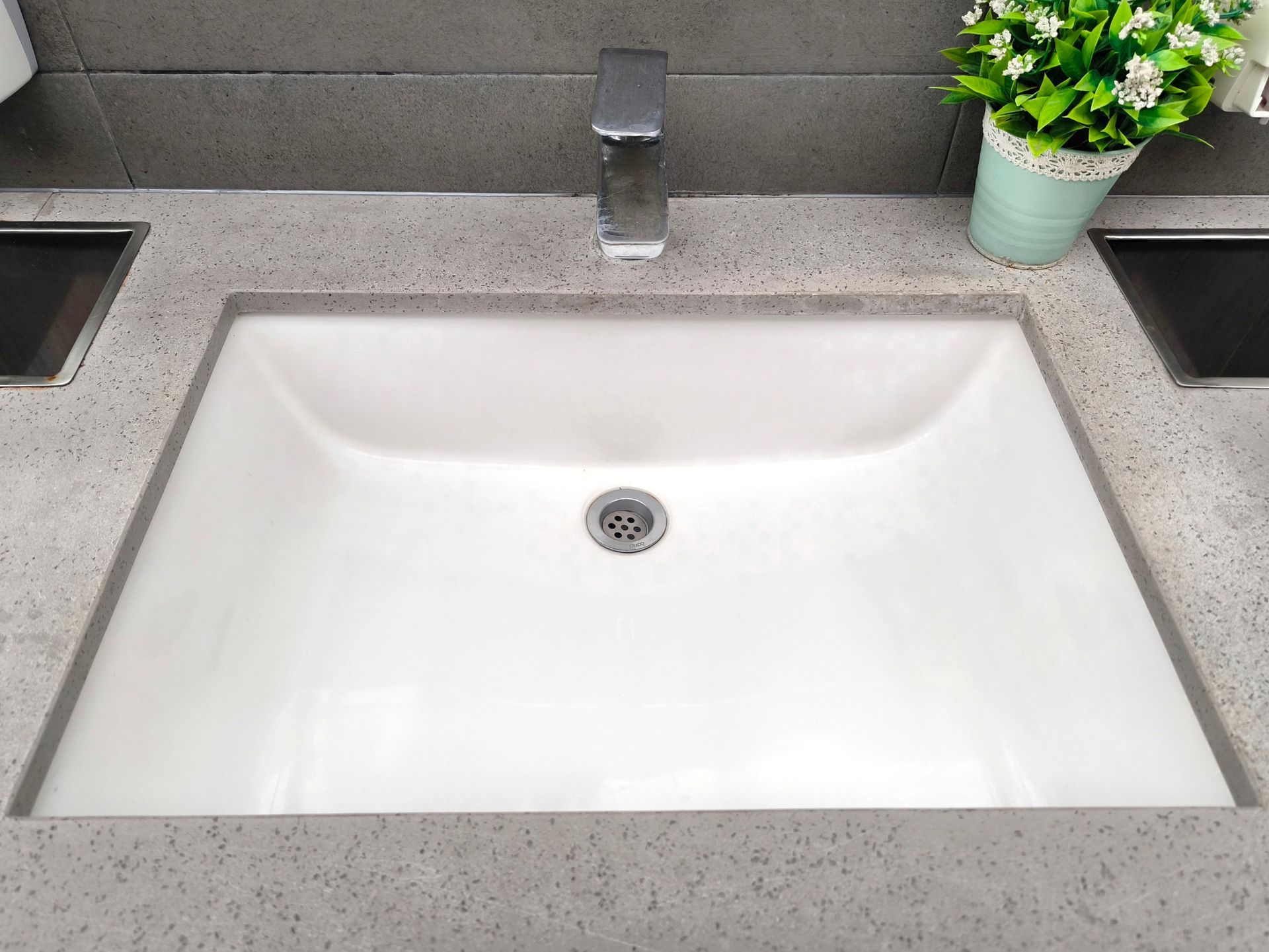
Undermount Bathroom Sinks
Why do homeowners prefer undermount bathroom sinks?
Undermount sinks are installed beneath the countertop, creating a smooth transition from the countertop to the basin. Many homeowners prefer this style because it is clean, simple, and easy to maintain.
This is one of the most practical bathroom sink styles for everyday use. Since there is no raised rim on top of the counter, it is easy to wipe water and debris directly into the sink. It also pairs well with stone, quartz, and other solid surface countertops.
Functional limitations
- Requires a compatible countertop material
- Installation must be precise
- Not usually used with laminate counters
- Sink replacement can be more involved later
Added functionality
- Easy to clean
- Keeps the countertop looking smooth
- Maximizes usable counter space
- Works well in both single and double vanities
Best use cases
- Primary bathrooms
- Hall bathrooms
- Busy family bathrooms
- Remodels focused on low-maintenance finishes
Faucet considerations
- Usually paired with deck-mounted faucets
- Faucet holes are drilled into the countertop
- Works with many faucet styles, depending on counter space
Works well with these home styles
- Transitional homes
- Updated Colonials
- Modern bathrooms
- Ranch and split-level remodels
Looks out of place in these styles
- Vintage bathrooms where a more visible sink style is preferred
- Rustic bathrooms that need more texture or character
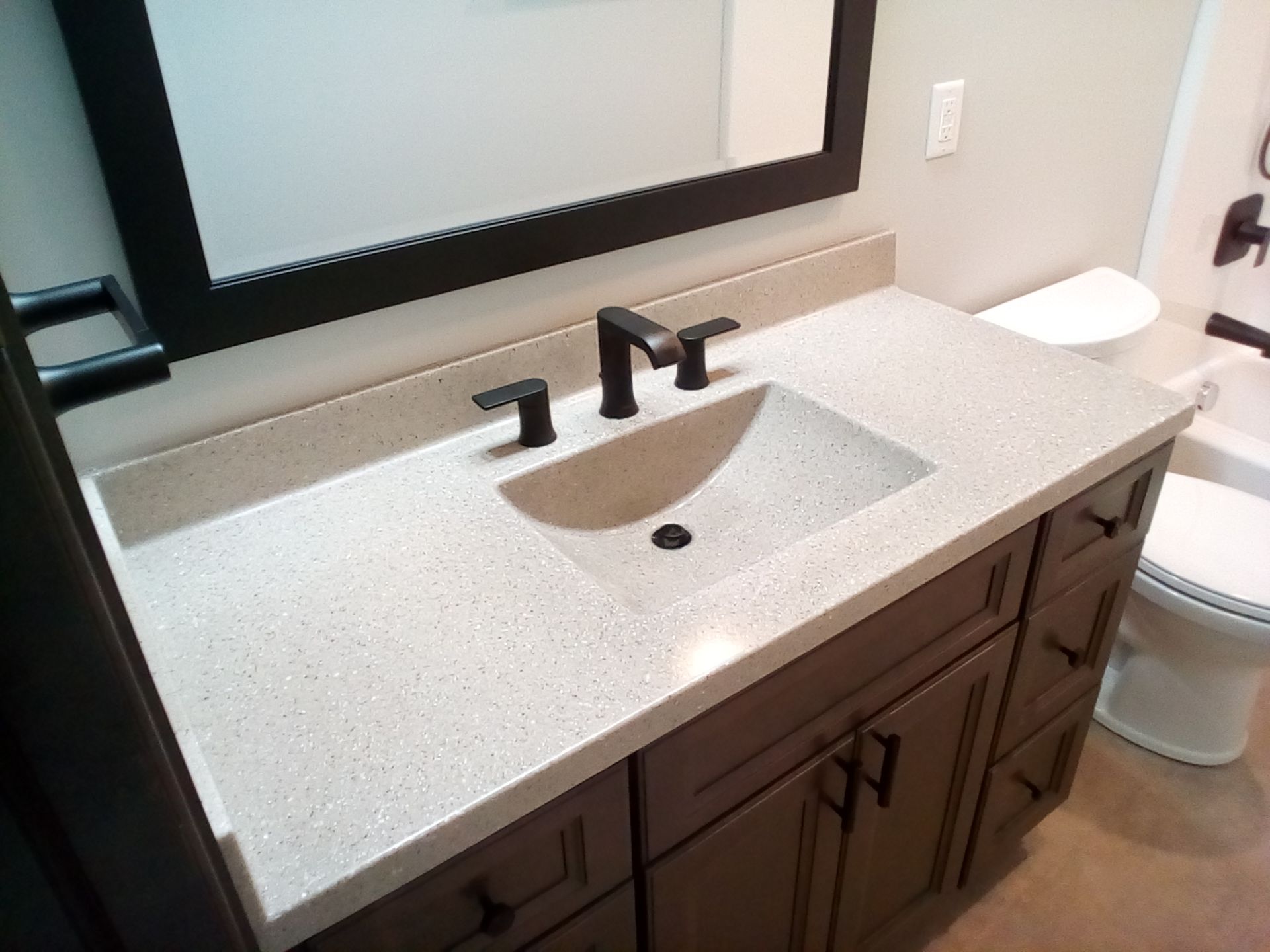
Integrated Sinks
Is an integrated sink worth the investment?
An integrated sink is built into the countertop as one continuous piece. The sink and counter are made from the same material or formed together, creating a seamless surface with no separate rim.
This style is often chosen for modern bathrooms or for homeowners who want a clean, low-maintenance design. It can be a smart option when simplicity and easy cleaning are priorities.
Functional limitations
- Fewer design combinations than separate sink and counter options
- Damage may be harder to repair in one isolated area
- It can cost more depending on the material and fabrication
Added functionality
- Very easy to clean
- No rim or seam around the sink
- Creates a streamlined look
- Can simplify the overall vanity design
Best use cases
- Modern bathrooms
- Small bathrooms where visual simplicity helps
- Homeowners who want low-maintenance surfaces
- Guest or primary bathrooms with clean design goals
Faucet considerations
- Typically uses deck-mounted faucets
- Faucet placement should be planned with the integrated basin shape
- Works best when the faucet design matches the simple look
Works well with these home styles
- Contemporary homes
- Updated split-levels
- Minimalist interiors
- Transitional bathrooms with simple finishes
Looks out of place in these styles
- Rustic bathrooms
- Historic-style remodels
- Traditional bathrooms with furniture-style cabinetry
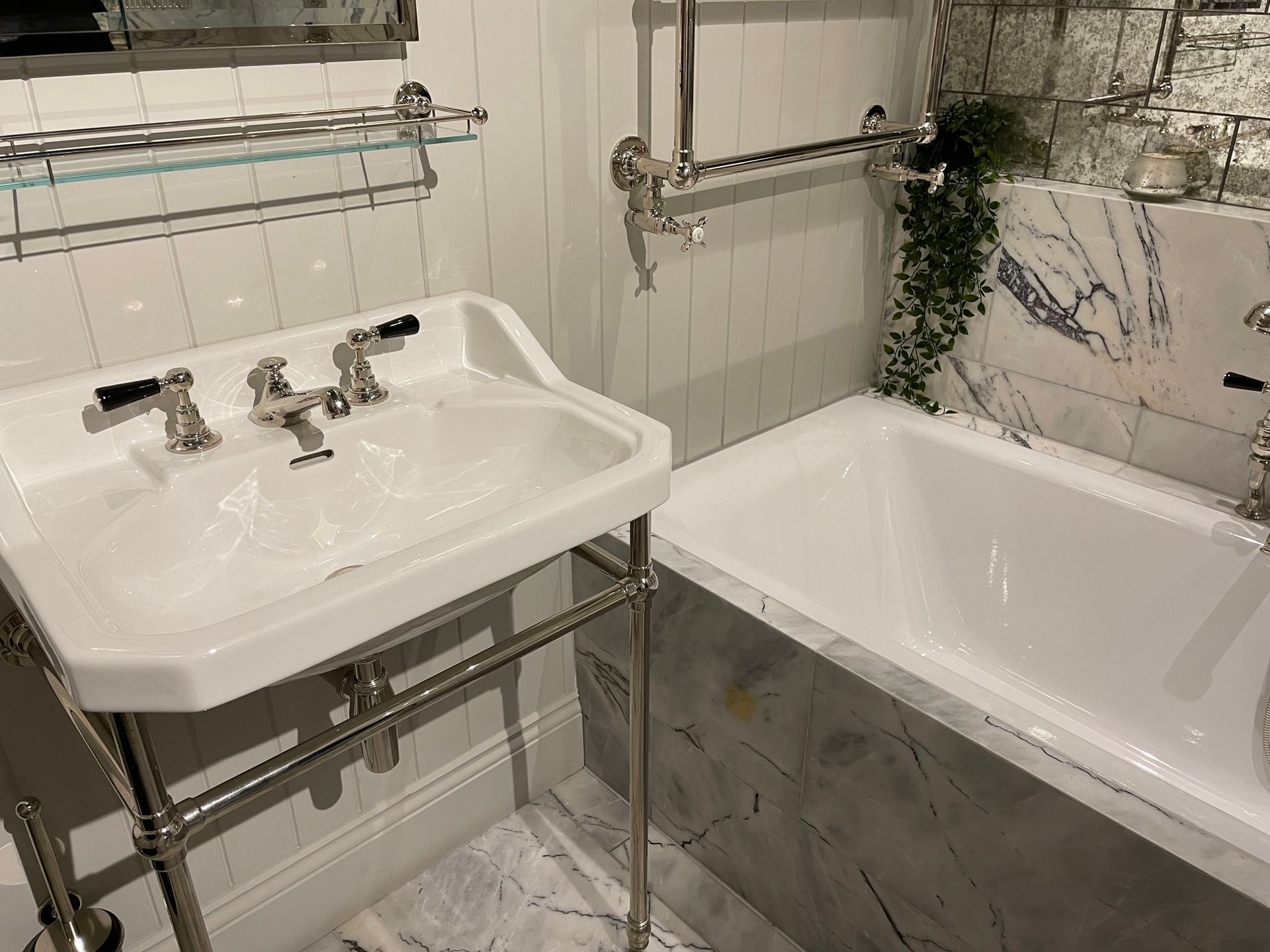
Console Sinks
When should you choose a console sink?
A console sink has a basin supported by legs or a frame, often with some counter space on each side. It feels more open than a vanity but more finished than a wall-mounted sink.
This can be a good middle-ground option for homeowners who want style and some surface space without a bulky cabinet. The main compromise is storage. Console sinks may offer a lower shelf, but they do not provide the concealed storage of a vanity.
Functional limitations
- Limited hidden storage
- Plumbing may be visible
- Open design requires neat organization
- Not ideal if you need cabinet space
Added functionality
- Provides more counter space than many pedestal sinks
- Keeps the bathroom feeling open
- Adds structure without a heavy cabinet
- Can work well in narrow bathrooms
Best use cases
- Powder rooms
- Guest bathrooms
- Medium-sized bathrooms
- Homes where style is important, but full storage is not needed
Faucet considerations
- Usually works with deck-mounted faucets
- Faucet style should match the frame finish
- Widespread faucets can work if the basin allows
Works well with these home styles
- Traditional homes
- Transitional bathrooms
- Older brick homes
- Vintage-inspired remodels
Looks out of place in these styles
- Ultra-modern bathrooms
- Bathrooms where maximum storage is required
- Very casual spaces where the design may feel too formal
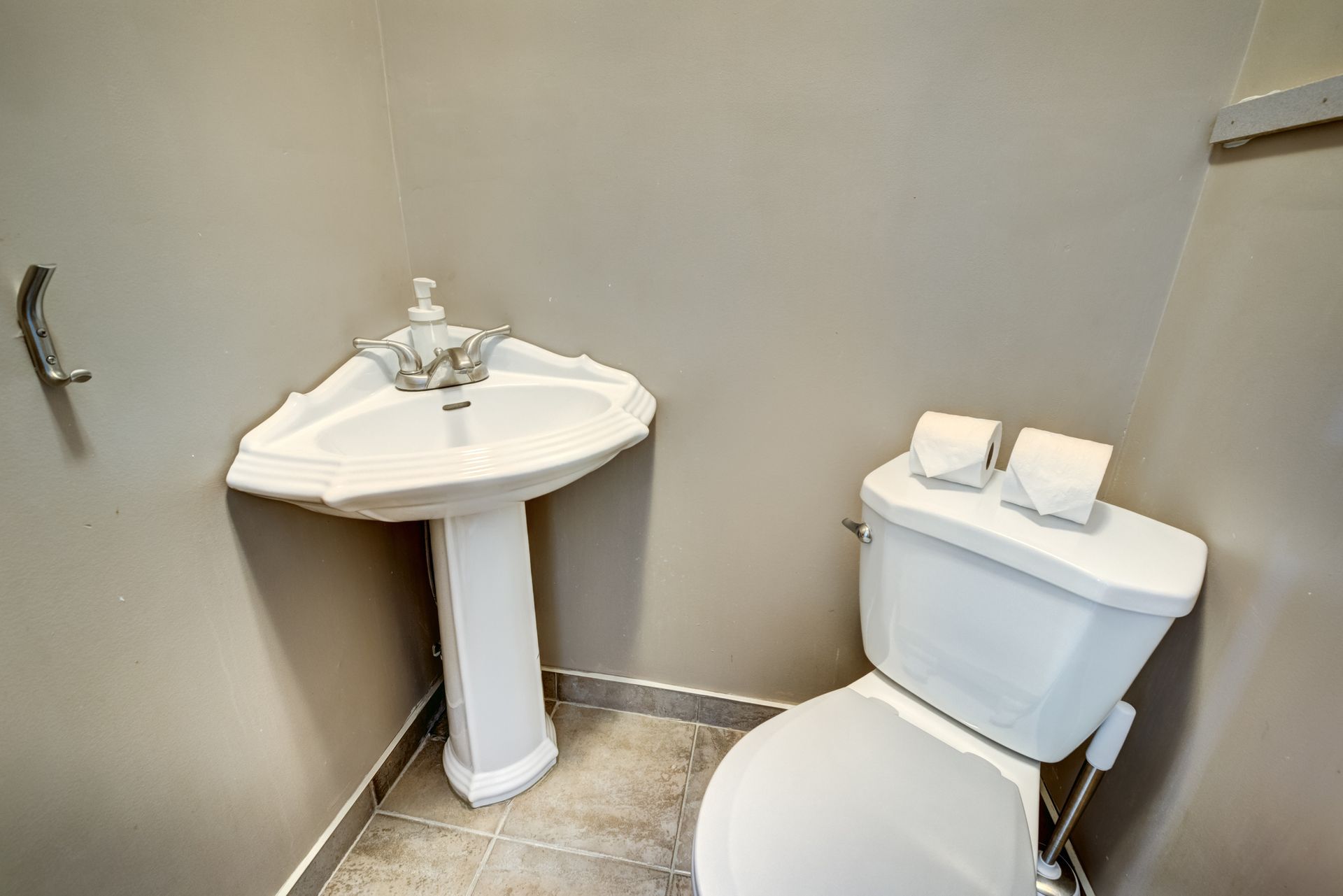
Corner Sink
Is a corner sink a smart space-saving option?
A corner sink is designed to fit into a bathroom corner, making it a useful solution for tight layouts. It is not the right choice for every bathroom, but it can solve layout problems in small spaces.
This style is especially helpful in half baths or older homes where the door swing, toilet placement, or plumbing location limits your options. A corner sink keeps the main walkway more open, making a small bathroom feel more usable.
Functional limitations
- Minimal counter space
- Usually, there is no built-in storage
- Smaller basin size
- May feel too limited for daily routines
Added functionality
- Makes use of unused corner space
- Improves movement in tight bathrooms
- Can make a small powder room more practical
Best use cases
- Half baths
- Very small bathrooms
- Older homes with awkward layouts
- Secondary bathrooms with light use
Faucet considerations
- Compact faucets work best
- Faucet reach must fit the smaller basin
- Wall-mounted options may be possible depending on plumbing
Works well with these home styles
- Older brick homes
- Smaller ranch homes
- Compact split-level bathrooms
- Powder rooms with tight layouts
Looks out of place in these styles
- Large bathroomsPrimary bathrooms
- Spaces where a full vanity would look more balanced
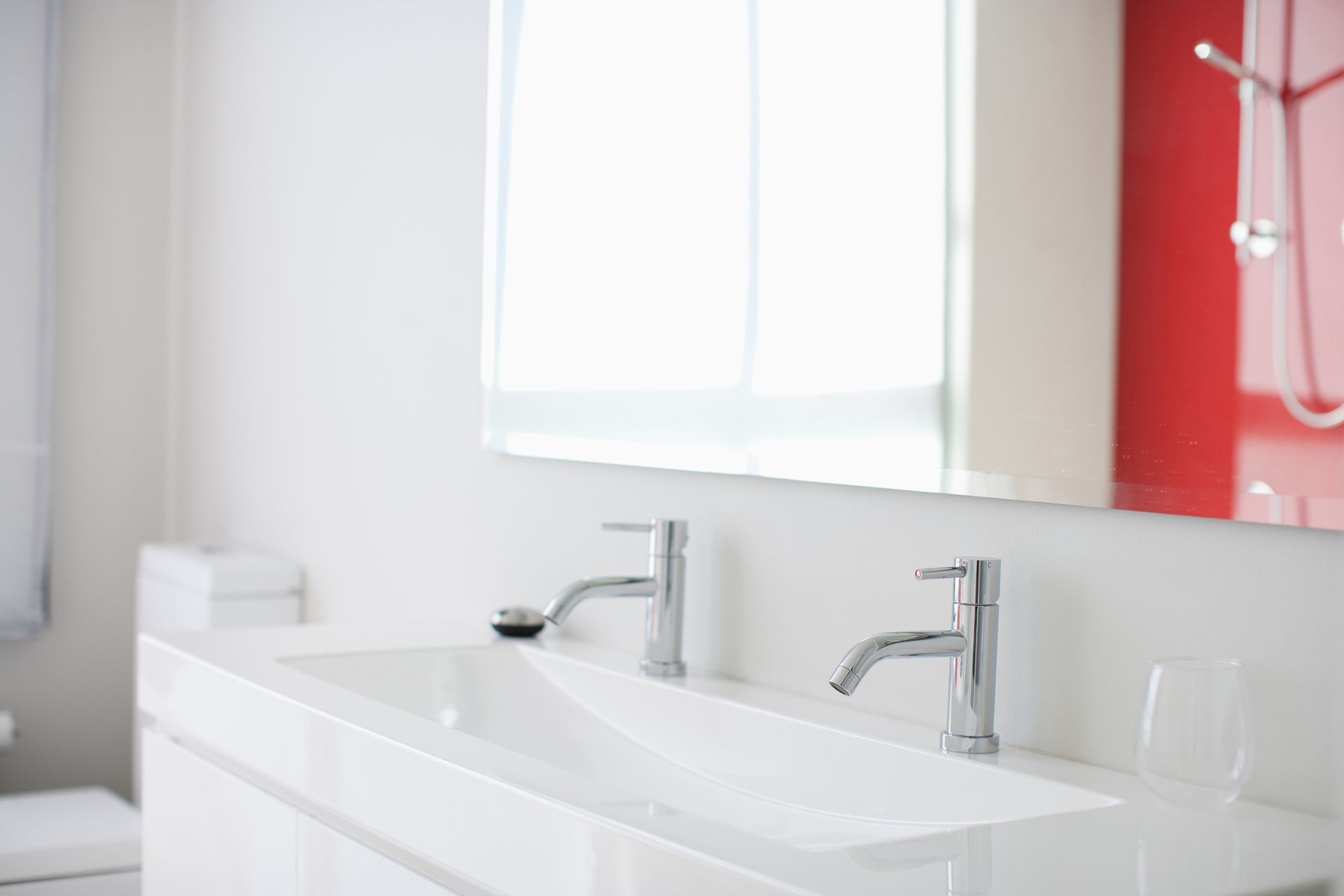
Trough Sinks
Are trough sinks practical for shared bathrooms?
A trough sink is a long, narrow sink that can often serve more than one person at a time. It is one of the more unique types of bathroom sinks, and it can be useful in family bathrooms when planned well.
Trough sinks can work especially well for kids or multi-user households because they create one shared washing area. However, they do not provide the same level of separation as two individual sinks, so privacy and personal space can be limited.
Functional limitations
- Can lack privacy between users
- May provide limited storage depending on the vanity design
- Requires enough wall and counter length
- A larger basin surface may take more cleaning
Added functionality
- Great for kids or multi-user households
- Allows more than one person to wash hands or brush teeth
- Can create a casual, functional shared space
- Offers a unique design feature
Best use cases
- Kids’ bathrooms
- Shared hall bathrooms
- Family bathrooms
- Modern or casual remodels
Faucet considerations
- May require longer or multiple faucets
- Faucet spacing should match how many people will use the sink
- Wall-mounted faucets can help keep the counter clear
Works well with these home styles
- Modern homes
- Transitional homes
- Family-focused remodels
- Casual bathroom designs
Looks out of place in these styles
- Formal traditional bathrooms
- Small powder rooms
- Bathrooms where individual sink space matters more
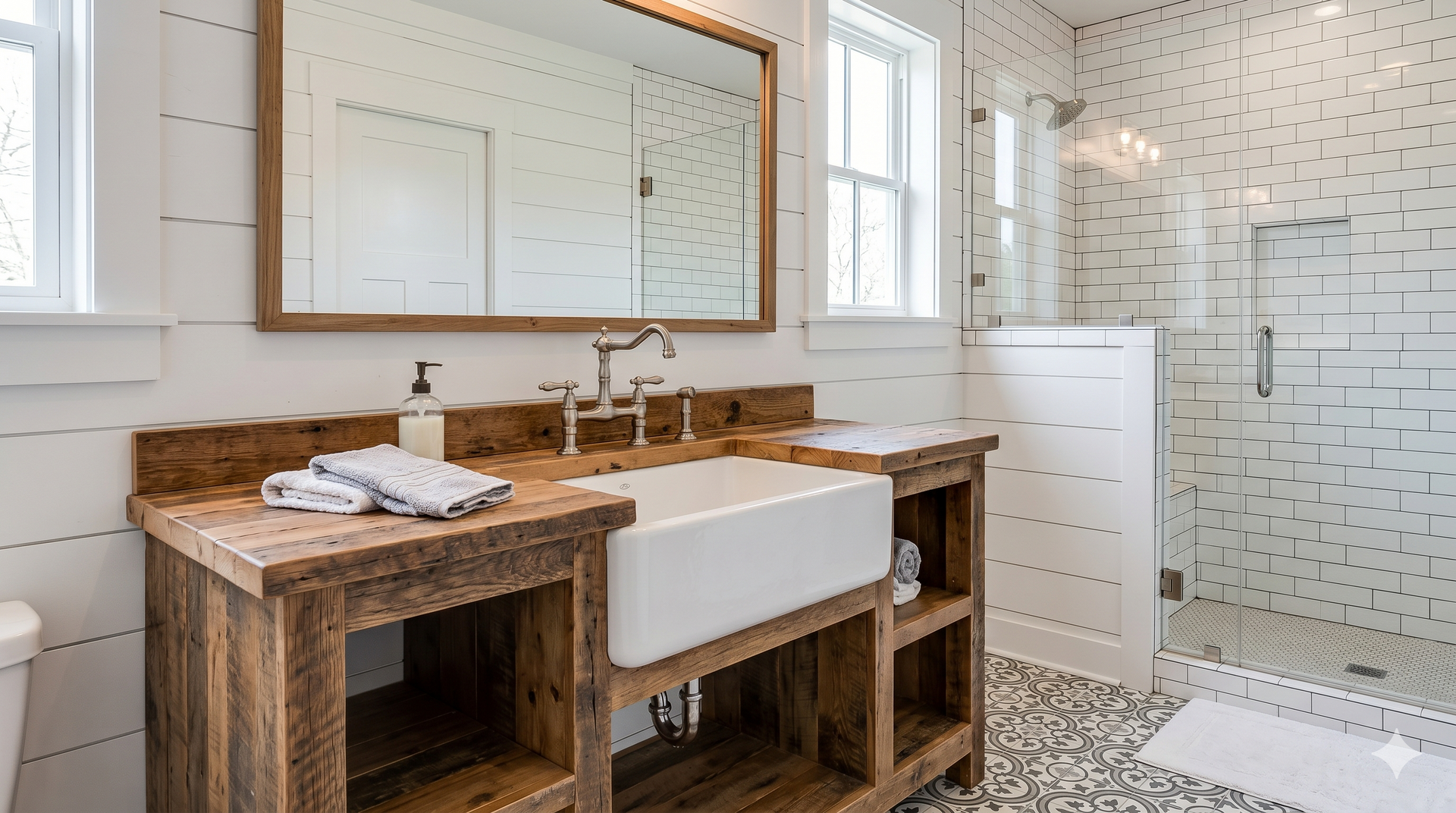
Farmhouse Sinks
Do farmhouse sinks work in modern bathrooms?
Farmhouse sinks, also called apron-front sinks, are much more common in kitchens than bathrooms. They have an exposed front panel that creates a bold visual statement. In a bathroom, this choice is rare because it usually requires more space, custom cabinetry, and careful design planning.
That does not mean it cannot work. A farmhouse sink can be a strong design choice in the right bathroom, especially in rustic, farmhouse, or transitional homes. The key is to make sure it fits the room's scale and doesn't feel forced.
Functional limitations
- Rare in bathrooms because of size and installation needs
- May require custom vanity construction
- Can feel oversized in small bathrooms
- Not as widely available in bathroom-friendly proportions
Added functionality
- Creates a bold visual statement
- Offers a deeper basin
- Can become a focal point in a custom bathroom design
Best use cases
- Larger bathrooms
- Custom remodels
- Rustic or farmhouse-inspired spaces
- Homeowners who want a distinctive feature
Faucet considerations
- Often works well with wall-mounted or high-clearance faucets
- Faucet size should match the deeper basin
- Placement needs to prevent splashing
Works well with these home styles
- Rustic homes
- Farmhouse-style interiors
- Transitional homes
- Bathrooms with warm wood tones or traditional finishes
Looks out of place in these styles
- Ultra-modern designs
- Very small bathrooms
- Sleek minimalist bathrooms
- Homes where the apron-front style conflicts with the rest of the design
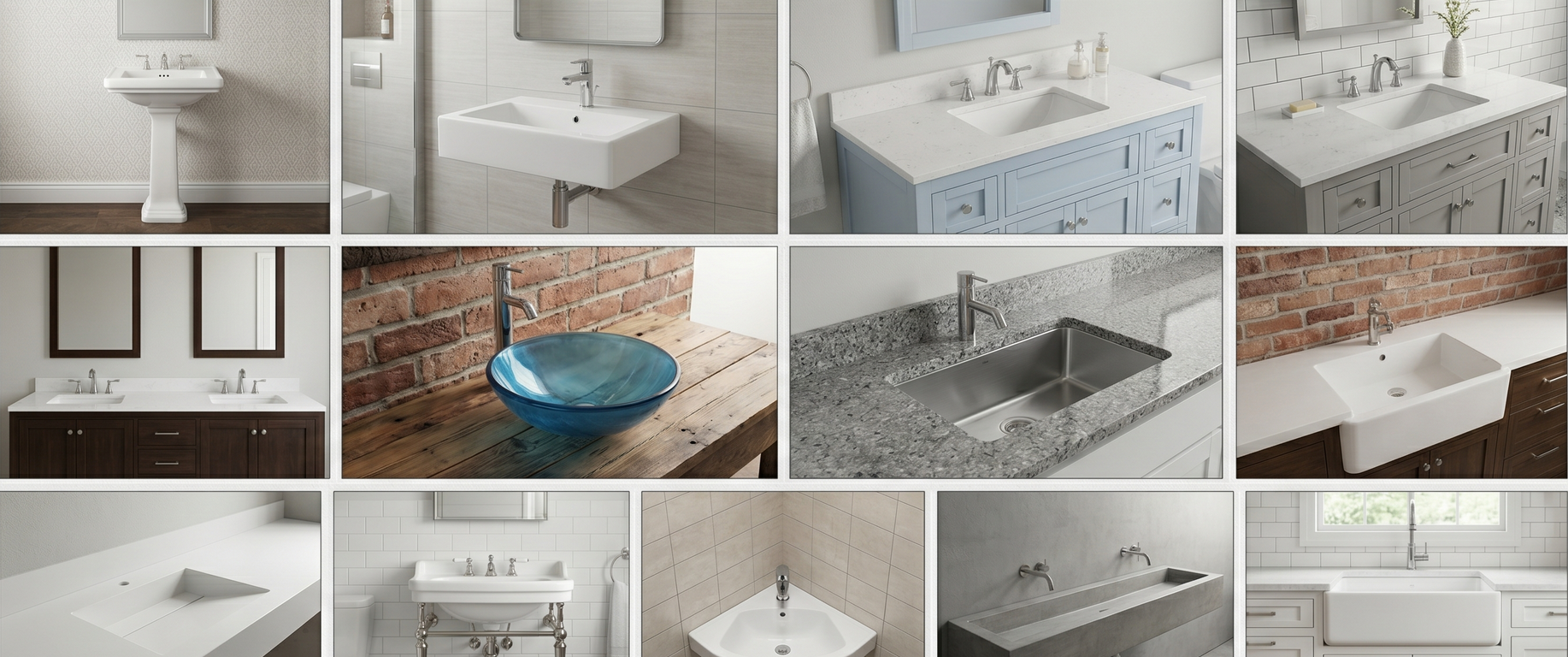
Comparing Bathroom Sink Styles at a Glance
Pedestal Sink: No storage, high space savings, classic look
Wall-Mounted Sink: No storage, very high space savings, modern look
Single Vanity Sink: Good storage, low space savings, versatile style
Double Vanity Sink: More storage, very low space savings, family-friendly layout
Vessel Sink: Storage depends on the vanity, low space savings, and a high-end look
Undermount Sink: Storage depends on the vanity, low space savings, and a sleek look
Integrated Sink: Storage depends on the vanity, low space savings, and a modern look
Console Sink: Limited storage, medium space savings, stylish appearance
Corner Sink: No storage, very high space savings, functional choice
Trough Sink: Limited storage, medium space savings, unique shared-use design
Farmhouse Sink: Storage depends on the vanity, low space savings, bold statement look
Choosing the Right Sink for Your South Hills Home
Choosing the right sink is not only about finding a style you like. It also has to make sense for your home’s layout, plumbing, and storage needs. In the South Hills of Pittsburgh, many homes have bathrooms that were built before today’s larger vanities and open layouts became common. That can affect what will fit comfortably.
Colonial homes often work well with traditional or transitional sink arrangements, such as single vanities, double vanities, pedestal sinks, and console sinks. Ranch homes and split-levels may have more compact bathrooms so that homeowners may benefit from wall-mounted, corner, or narrow single vanity options. Older brick homes often have charm and character, but they may also have tighter plumbing layouts that need to be reviewed before choosing a sink style.
Storage is another major factor. If your current bathroom already feels short on cabinet space, a pedestal, wall-mounted, or corner sink may make the room feel more open but less functional. In that case, a single or double vanity, an undermount sink, or an integrated sink may be more practical.
Plumbing should also guide the decision. Moving plumbing can sometimes be worthwhile, especially during a larger bathroom remodel, but it should be planned carefully. The right sink arrangement should work with the room instead of creating new layout problems.
Upgrade Your Bathroom with Obringer’s
The best bathroom sink is the one that fits your space, supports your daily routine, and feels appropriate for the style of your home. Some homeowners need more storage. Others need a better layout for a small bathroom. Families may benefit from a double vanity or trough sink, while powder rooms may only need a simple pedestal, wall-mounted, or console option.
Obringer’s Painting & Remodeling helps homeowners throughout the South Hills of Pittsburgh plan bathroom remodels with function, style, and long-term use in mind. From custom sink and vanity design to full bathroom remodeling, our team can help you compare options and choose finishes that make sense for your home.
If you are planning a bathroom renovation in the South Hills of Pittsburgh, Obringer’s Painting & Remodeling can help you choose the right sink, layout, and finishes for your space. Contact our team today to start designing a bathroom that works as good as it looks.

Author: Derek Obringer
Owner & Founder of Obringer's Painting and Remodeling, Derek Obringer brings attention to detail, together with experience, and superior customer service into each and every home that his company does work.
Painting And Remodeling Blog